APC News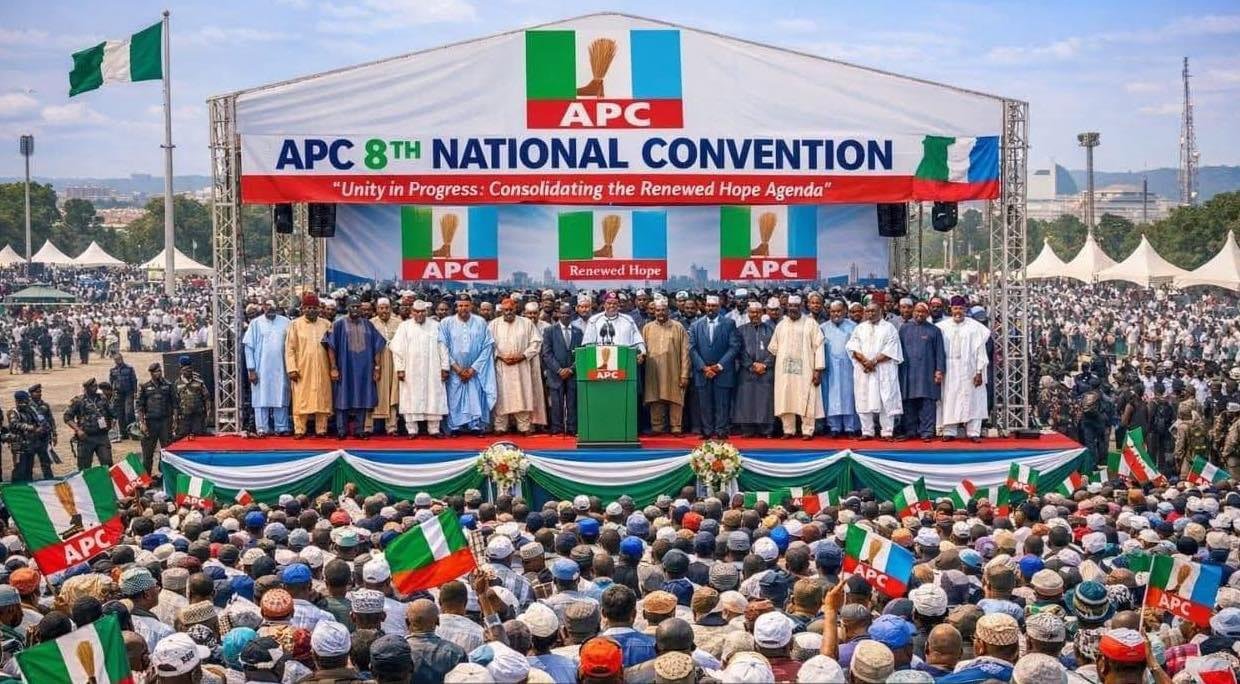
The All Progressive Congresses (APC) has successfully concluded its 8th National Convention, marking a significant internal transition with the emergence of a new National Working Committee (NWC). The leadership was produced through a consensus arrangement and formally ratified by party delegates during the 4th Elective National Convention.
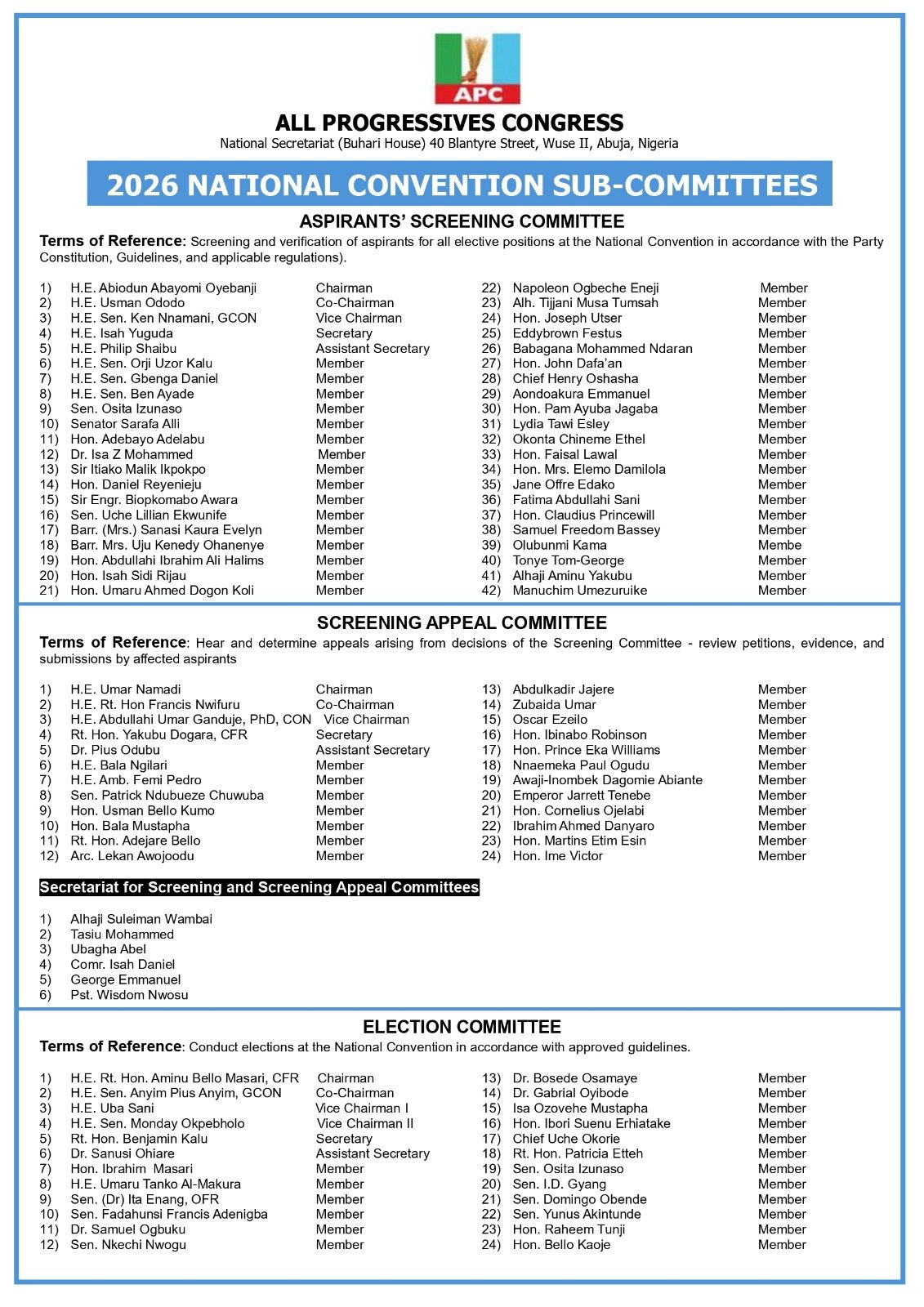
At the center of the new leadership structure, Nentawe Yilwatda emerged as National Chairman, while Surajudeen Basiru was elected National Secretary. Other notable appointments include Felix Morka as Publicity Secretary and Dayo Israel, who retained his role as Youth Leader. The Convention Election Committee officially announced the full list of NWC members.
In his acceptance speech, Yilwatda framed his emergence as a renewed mandate for service, emphasizing unity within the party and a commitment to national development. He assured stakeholders that the new leadership would execute its responsibilities with diligence and would not falter in delivering on expectations.
The convention took place at Eagle Square and attracted over 8,000 delegates alongside key political figures. Among those present were President Bola Ahmed Tinubu, Vice President Kashim Shettima, National Assembly leaders, APC governors, and other influential party stakeholders.
Addressing attendees, President Tinubu acknowledged the difficulty of ongoing economic reforms but maintained that Nigeria is on a steady path toward recovery. He stressed that meaningful national rebuilding requires difficult decisions and sustained resolve. According to him, there are emerging signs of progress, including increased investor confidence, renewed foreign interest in the oil and gas sector, a heavily oversubscribed Eurobond issuance, and Nigeria’s removal from the global financial “grey list,” which he described as a restoration of international credibility.
On infrastructure, particularly electricity, the president outlined efforts to tackle persistent power challenges through strategic interventions such as the Grid Asset Management Company. He assured Nigerians that improvements would be gradual but consistent.
Tinubu also highlighted the importance of youth, describing Nigerian young people as central to the country’s future growth and stability.
Chairman of the Progressive Governors’ Forum, Hope Uzodimma, reinforced the administration’s stance, stating that current reforms though challenging are essential for building a resilient and productive economy. He emphasized that effective governance requires long-term vision rather than short-term appeasement.
Similarly, Minister of Finance Wale Edun pointed to measurable economic improvements, noting that growth has increased from approximately 2 percent to around 4 percent annually, while acknowledging that further gains are necessary.
Chairman of the APC National Convention Planning Committee, Bello Masari, expressed strong confidence in the party’s electoral prospects ahead of the 2027 general elections. He asserted that the APC remains the most popular political party in Nigeria and is well-positioned for future contests.
Masari also addressed governance accountability, arguing that responsibility for national challenges should be more accurately distributed across federal, state, and local governments. He cautioned against the tendency to attribute all issues solely to the presidency, stressing the need for a more balanced understanding of governance roles across different levels.